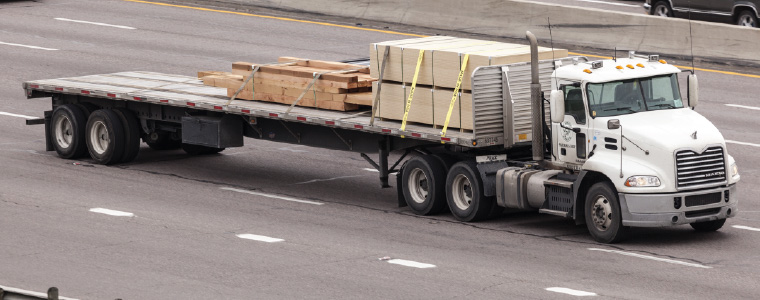
If your shipment is too big for LTL, but you’re not ready to pay for a full truck, partial truckload shipping might be exactly what you’re looking for, and most shippers don’t even know it exists.
Here’s what PTL shipping is, how it works, and how to know when it’s the right call for your freight.

What Is Partial Truckload Shipping?

Partial truckload (PTL) shipping — sometimes called a partial load or partial freight load — is a mode that sits between LTL (less-than-truckload) and FTL (full truckload). You’re booking a portion of a trailer, typically between 5,000 and 20,000 lbs or 6 to 18 linear feet, without filling the entire truck.
The key difference from LTL: your freight typically moves on fewer trucks with fewer handling touches — often direct or near-direct from origin to destination. That means less dock exposure, lower damage risk, and in many cases, faster transit times.

PTL vs. LTL vs. FTL: How They Stack Up

LTL Partial Truckload Full Truckload
Shipment Size 1-5 pallets 6–18 linear ft / 5k–20k lbs 20+ pallets / 40k+ lbs
Handling Multiple touches Minimal Direct
Transit Time Slower Moderate to fast Fastest
Cost Per 100 lbs (CWT) Per linear foot or spot Per load
Damage Risk Higher Lower Lowest
Best For Small, light freight Mid-size, fragile, or time-sensitive High-volume lanes
If your freight consistently falls in the middle of that range, PTL is often the better option both on cost and on care.


5 Signs You Should Be Using Partial Truckload

1.

Your LTL Freight Keeps Getting Damaged

LTL freight changes hands multiple times at cross-dock facilities. Every touch is an opportunity for something to go wrong. If you’re filing damage claims regularly, PTL’s reduced handling can solve the problem without jumping to a full dedicated truck.

2.

You’re Shipping 6+ Pallets Consistently

Once you hit 6 to 8 standard pallets, LTL pricing starts to lose its advantage. Partial freight loads are typically priced by linear foot, which can be more predictable and more competitive at that volume.

3.

Your Freight Is Fragile, Oversized, or High-Value

Flatbed partial loads, temperature-sensitive goods, and high-density freight all benefit from fewer hands on the shipment. PTL gives you LTL pricing with closer-to-truckload treatment.

4.

LTL Transit Times Are Killing Your Delivery Windows

Because partial truckload shipments often move without the stop-and-sort routing of LTL, they can deliver faster — especially on lanes where LTL has limited direct service.

5.

You’re on a Lane With Consistent Volume

If you’re regularly moving similar freight on the same lane, PTL carriers can build that into their network — which often translates into better rates and more reliable service over time.


How Partial Truckload Pricing Works

Unlike LTL, which prices freight based on weight, freight class, and accessorials, most PTL shipping companies price by linear feet of trailer space. Some PTL carriers also price by weight or a combination, depending on the lane and carrier.


Factors that influence your partial truckload quote:

Linear feet or weight of the shipment

Lane (origin/destination pair and carrier network density)

Commodity type

(hazmat, high-value, temp-controlled)

Accessorial needs
(liftgate, appointment delivery, inside delivery)

Market conditions
— spot vs. contract pricing

Because PTL capacity isn’t as commoditized as LTL, your rate can vary significantly depending on who’s sourcing it. That’s where a freight partner with the right carrier relationships makes a real difference.

Finding the Right Partial Truckload Carriers

Not all PTL shipping companies operate the same way. Some specialize in certain regions or corridors, others have dense national networks. When you’re looking for partial truckload carriers, the key is matching your lane and freight type to carriers who run that space efficiently.
What to look for:
  • Network coverage on your specific lane
  • Equipment availability (dry van, flatbed, temperature-controlled)
  • Track record with your commodity type
  • Claims ratio and damage rates
  • Technology for tracking and communication
Vetting this on your own for every shipment is time-consuming. That’s why shippers who move partial freight regularly tend to work through freight forwarders who already have those carrier relationships in place.

Partial Truckload Shipping With Approved Freight Forwarders

At Approved Freight Forwarders, we work with a vetted network of partial truckload carriers across the continental U.S. where capacity and carrier knowledge matter more than almost anywhere else.


Whether you’re moving partial freight loads out of Los Angeles, need a PTL solution for an Arizona-bound shipment; we’ll match your cargo to the right carrier, negotiate competitive rates, and keep your shipment moving.

Ready to see what PTL costs on your lane?

Frequently Asked Questions About Partial Truckload Shipping

Most PTL carriers start at around 5,000 lbs or 6 linear feet of trailer space. Below that, LTL is typically the better fit.
It depends on shipment size. For smaller freight, LTL usually wins on price. But as your shipment grows toward 8–12 pallets, PTL often becomes more competitive — especially when you factor in lower damage rates and fewer reweigh or reclassification surprises.
Transit times vary by lane, but PTL typically delivers faster than LTL on the same lane because freight moves with fewer stops. Exact timing depends on carrier availability and routing.

If your shipment is relatively small in size, LTL freight will be the most cost-effective choice. However, because the truck will make multiple stops, it can be slower than full truckload service.

Yes. Approved Freight Forwarders specializes in these non-contiguous lanes. PTL and consolidation options are available depending on volume and timing — contact us to discuss your specific freight needs.

Volume LTL is still priced on the LTL freight class system and moves through LTL networks, just at a higher volume discount. PTL is a fundamentally different service: different pricing model, different carrier type, and typically fewer handling touches.

Get a Free Quote

  • This field is for validation purposes and should be left unchanged.