
 (626) 723-0722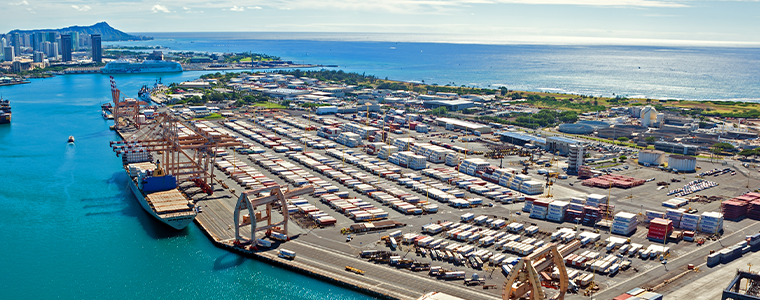
Why Los Angeles Is the Gateway to Hawaii
Geography makes Los Angeles the undisputed hub for Hawaii-bound freight. The Port of Los Angeles and the neighboring Port of Long Beach are the two busiest container ports in the United States, and they sit directly on the Pacific coast — the natural launch point for westbound ocean shipping.
Most freight forwarders consolidate shipments at warehouses in the City of Industry or the greater LA area before sending containers west. Approved Freight Forwarders’ Los Angeles terminal handles exactly this: receiving your cargo, palletizing, consolidating into containers, and coordinating the ocean or air leg of the journey.
Key ports used for Hawaii freight from California:
- Port of Los Angeles (San Pedro)
- Port of Long Beach
- Port of Oakland (for some carriers and routes)
- Port of San Diego (used for RORO, oversized, and wide-load shipments)
Ocean Freight vs. Air Freight: Which Is Right for You?
The two modes of transport for Hawaii-bound freight are ocean shipping and air freight. Each serves a different type of shipper.
Ocean Freight (LCL/FCL)
Transit Time: 5–7 Days
Cost: Lower (best for bulk)
Best For: Pallets, furniture, machinery, bulk goods
Ideal Load Size: Full or partial containers
Air Freight
Transit Time: 1–2 days
Cost: Higher (best for urgent)
Best For: Time-sensitive, high-value, perishables
Ideal Load Size: Smaller, lighter shipments
Air Freight — When Speed Is Non-Negotiable
Air freight to Hawaii is significantly faster but comes at a premium. It’s the right call when cargo is time-sensitive, high-value, or temperature-controlled.
Transit time: 1–2 business days from Los Angeles International Airport (LAX) to Daniel K. Inouye International Airport (HNL) on Oahu.
Best for: Medical equipment, perishable goods, electronics, urgent commercial shipments, and high-value items requiring extra security.
Approved Freight Forwarders offers both ocean and air freight options, so you’re not locked into one mode. Their team can help you weigh the tradeoffs based on your specific cargo and timeline.
LCL vs. FCL: What’s the Difference and Which Saves You Money?
If you’re going the ocean route, the next decision is whether to ship LCL or FCL. This choice directly affects costs.
LCL (Less-than-Container Load)
With LCL, your freight shares a container with other shippers’ cargo. You only pay for the cubic footage your shipment actually occupies.
Best when: Your shipment doesn’t fill an entire container — typically anything under 15–20 cubic meters.
Tradeoff: Slightly longer transit times due to consolidation and deconsolidation at the warehouse.
FCL (Full Container Load)
Pro Tip: Not sure which fits your shipment? Approved Freight Forwarders offers both LCL consolidation and FCL services out of their Los Angeles warehouse. They’ll help you calculate which makes more financial sense for your load.
How Much Does Freight from Los Angeles to Hawaii Cost?
This is the most common question — and the most frustrating to answer with a single number, because freight pricing depends on several variables:
- Shipment size and weight (cubic feet or CBM)
- Ocean vs. air transport
- LCL vs. FCL (for ocean)
- Origin and destination (which Hawaiian island)
- Commodity type (hazmat, perishables, and oversized items carry surcharges)
- Fuel surcharges and seasonal demand fluctuations
As a general reference point, ocean freight rates will be based on the factors above. Air freight is substantially more expensive per pound but may be justified for time-sensitive cargo.
How Long Does Freight from LA to Hawaii Take?
Transit times depend on your chosen shipping method and destination island:
| Route | Ocean (LCL/FCL) | Air Freight |
|---|---|---|
| LA → Honolulu (Oahu) | 5–7 days | 1-2 days |
| LA → Kahului (Maui) | 7-9 days | 1-2 days |
| LA → Hilo / Kona (Big Island) | 7-10 days | 2-3 days |
| LA → Lihue (Kauai) | 7-10 days | 2-3 days |
Shipping to Specific Hawaiian Islands
Hawaii isn’t just Honolulu. If your cargo is destined for Maui, the Big Island, or Kauai, the logistics are different — and not every freight forwarder has the infrastructure to handle it.
Oahu (Honolulu)
The main hub. Most freight arrives at Honolulu Harbor and is delivered directly. Approved Freight Forwarders has a full terminal in Honolulu staffed with a local team.
Maui
Freight arrives at Kahului Harbor and is delivered via local trucking on the island. Transit times are slightly longer than Oahu.
Big Island
(Hilo & Kona)
Kauai
Do You Need a Freight Forwarder to Ship to Hawaii?
Technically, no. Practically, yes — especially if you’re shipping commercial freight, large volumes, or anything that requires special handling.
Here’s what a freight forwarder handles that most shippers can’t easily do on their own:
- Carrier relationships: Forwarders negotiate volume rates with ocean carriers and airlines, passing savings to you.
- Consolidation: For LCL shipments, they consolidate your cargo with others’, so you’re not paying for space you don’t use.
- Documentation: Hawaii shipments require a Bill of Lading (BOL), and commercial shipments may need additional customs and port paperwork.
- Warehousing: Your freight may need to be staged at a Los Angeles warehouse before the vessel departs. Forwarders handle this.
- Inter-island coordination: Freight arriving on Oahu that needs to go to a neighbor island requires barge coordination. A forwarder with local terminals handles this seamlessly.
- Problem resolution: Delays, damaged cargo, customs holds — a forwarder has the contacts and experience to resolve issues quickly.
What Can You Ship? (Including Hazmat and Special Cargo)
Most commercial goods can travel from Los Angeles to Hawaii without issue. A few categories require extra attention:
Hazardous Materials
Hazmat freight can ship to Hawaii, with exceptions (explosive materials are prohibited). Approved Freight Forwarders has specialized hazmat shipping capabilities and can guide you through the proper documentation and packaging requirements.
Oversized and Heavy Cargo
Wide loads, heavy machinery, and oversized items may ship via Roll-On/Roll-Off (RORO) service, typically through the Port of San Diego. These shipments require specialized planning.
Food and Perishables
Temperature-controlled and food-grade shipments require specific handling. Approved Freight Forwarders serves the food and beverage industry with compliant logistics solutions.
Wine & Spirits
Frequently Asked Questions
Ship Freight from Los Angeles to Hawaii
Get a Free Quote