
 (626) 723-0722
Hawaii imports about 85% of the goods used in the state. Residents and businesses alike rely on air freight to deliver high-value goods, time-sensitive items, perishables like fresh seafood products, and more to the Aloha State.
In this article, we’ll show you everything you need to know to make your next Hawaii air cargo shipment simple. We’ll walk you through some facts and figures to give you a lay of the land. We’ll show you the advantages air freight offers Hawaii shippers. And, finally, we’ll show you what you need to know to move your air cargo to or from Hawaii with ease.
In This Article
Understanding Hawaii Air Freight: Facts and Figures
- Inbound Air Freight
- Outbound Air Freight
- Common Origin and Destination Points: Domestic & International
Why Choose Air Freight for Hawaii Shipments?
- Shorter Timelines
- Less Handling
- Fewer Fees
5 Must-Knows About Hawaii Air Cargo
- Service Levels
- Pickups & Deliveries
- Multi-Modal Providers
- Hawaii-Specific Restrictions
- Air Freight Restrictions
How Much Does Hawaii Air Freight Cost?
Understanding Hawaii Air Freight: Facts and Figures

Along with ocean freight, air freight is a key mode for moving goods and supplies to and from Hawaii.
Inbound Air Freight
Between 1990 and 2019, the volume of inbound Hawaii air cargo more than doubled. What kind of items do Hawaii shippers bring in via air freight? Check out the following list of the most common air freight commodities headed to Hawaii.
More recent numbers tell the same story. According to Hawaii Department of Transportation airport statistics, Daniel K. Inouye International Airport (HNL) handled roughly 60,391 tons of air cargo in 2024 — still far more than any other airport in the state. Kona International Airport (KOA) on the Big Island handled about 4,116 tons over the same period.
Most Common Inbound Air Freight Commodities
Domestic: Electronics; precision instruments; miscellaneous manufactured products; machinery; motorized vehicles; transport equipment; textiles/leather; pharmaceuticals; articles of base metal; and meat/seafood.
International: Exports of repaired/returned imports; handbags, wallets, and jewelry cases; jewelry and precious metal; watches; fresh and chilled fish; computers and parts; art paintings and drawings; seats and parts; medical, surgical, and dental equipment; and natural and cultured pearls.
(Source)
Outbound Air Freight
Between 1990 and 2019, outbound Hawaii air cargo didn’t see as much growth as inbound air cargo. Instead, outbound cargo only increased by about 50% during that 29-year period. If you’re curious what kind of items Hawaii shippers export via air freight, you’ll find a list of the most common commodities below.
Most Common Outbound Air Freight Commodities
Domestic: Mixed freight; pharmaceuticals; other foodstuffs; meat/seafood; other agricultural products; textiles/leather; alcoholic beverages; printed products; and electronics.
International: Aircraft parts; turbojets and turbopropellers; electric telephone parts; live and fresh crustaceans; aircraft engines and parts; military apparel and equipment; parts and accessories; tank and armored fight vehicles; fresh melons and papayas; coffee and coffee husks.
(Source)
Common Origin and Destination Points for Hawaii Air Freight
Hawaii air freight comes and goes from all over the U.S.—and the world. Next, we’ll take you on a quick tour of the most common origin and destination points for Hawaii air cargo.
Top Destinations for Outbound Domestic Air Freight from Hawaii
- Los Angeles International Airport (LAX)
- Oakland International Airport (OAK)
- Ontario International Airport in Southern California (ONT)
- San Francisco International Airport (SFO)
- Dallas/Fort Worth International Airport (DFW)
Top Origin Points for Inbound Domestic Air Freight to Hawaii
- Los Angeles International Airport (LAX)
- Ontario International Airport in Southern California (ONT)
- Memphis International Airport (MEM – a FedEx hub)
- Louisville Muhammad Ali International Airport (SDF – a UPS hub)
Top Destinations for Outbound International Air Freight from Hawaii
- Sydney Kingsford Smith Airport, Australia (SYD)
- Auckland Airport, New Zealand (AKL)
- Hong Kong International Airport (HKG)
- Tokyo Haneda Airport, Japan (HND)
- Vancouver International Airport, Canada (YVR)
Top Origin Points for Inbound International Air Freight to Hawaii
- Narita International Airport, Japan (NRT)
- Tokyo Haneda Airport, Japan (HND)
- Chubu Centrair International Airport, Japan (NGO)
- Kansai International Airport, Japan (KIX)
- Incheon International Airport, South Korea (ICN) in South Korea
Finally, Hawaii has 15 airports across the state, nine of which receive air cargo. Daniel K. Inouye International Airport (HNL) on Oahu receives far and away the most air freight, as measured in cargo tons.
Here’s how all of Hawaii’s airports stack up, in order of most air cargo tons received to least:
1. Daniel K. Inouye International Airport, Oahu (HNL)
2. Kahului Airport, Maui (OGG)
3. Hilo International Airport, Big Island (ITO)
4. Ellison Onizuka Kona International Airport at Keahole, Big Island (KOA)
5. Lihue Airport, Kauai (LIH)
6. Kapalua Airport, Maui (JHM)
7. Molokai Airport (MKK)
8. Lanai Airport (LNY)
9. Kalaupapa Airport, Molokai (LUP)
Cargo doesn’t stop at the airport — getting it from the tarmac to its final destination matters just as much as the flight itself. We keep terminals and delivery fleets positioned near Hawaii’s busiest cargo airports: close to Kona International (KOA) and Hilo International (ITO) on the Big Island, and just a few miles from Lihue Airport (LIH) on Kauai. That means door-to-door pickup and delivery on all four major islands, not just airport-to-airport service.
Now that you’ve got a good lay of the land in terms of Hawaii air cargo, let’s take a closer look at why Hawaii shippers might choose this mode of transportation.
Why Choose Air Freight for Hawaii Shipments?
When you price it out, you’ll discover that air freight is often the most expensive option for moving goods and supplies to Hawaii. However, along with that cost comes three distinct advantages.
Air Freight Advantage #1: Shorter Timelines

When time is tight, air freight is the right choice to get your items to an isolated archipelago like Hawaii. Air freight can arrive in Hawaii in as little as a few days—or faster, depending on how much you’re willing to pay.
In contrast, the ships carrying ocean freight can take anywhere from five to nine days to transit from California to Hawaii. Plus, you’ll need to add additional days on either end for the ship to get loaded and unloaded.
Bottom line: When your timelines are critical, go with air freight.
Air Freight Advantage #2: Minimal Handling
When you move items to Hawaii via ocean freight, they’re subject to all kinds of forces along the way. This includes the loading and unloading of the container, plus the impact of the wind and waves on the steamship as it crosses the Pacific Ocean. (That’s why it’s so important to package your ocean freight correctly!)
Despite all the care that goes into your shipment, sometimes goods that travel via ocean freight arrive with an occasional bump or bruise.
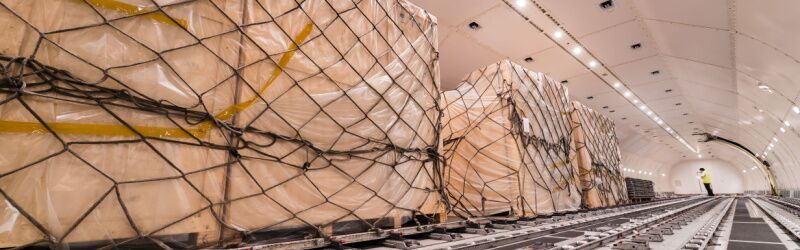
In contrast, air freight shipments are subject to minimal handling. As a result, air freight usually arrives in impeccable shape.
To offer one example, did you happen to notice the handbags, wallets, and jewelry listed among the most popular air freight commodities above? Luxury retailers rely on air cargo to move their most expensive items so they arrive in perfect condition.
Advantage #3: Fewer Handling Charges (or None at All!)

If you’re familiar with ocean freight, you also might be familiar with all the line items on an ocean freight invoice—terminal handling charges, drayage charges, wharfage charges, and more. All of these little items can really add up.
In contrast, air freight shipments are generally subject to fewer “extra” charges. Some companies may add on documentation, handling, or other miscellaneous fees to handle an air freight shipment. However, Approved Freight Forwarders doesn’t charge any additional fees for air freight shipments. We only charge for the freight itself.
This can make it a lot easier to understand your all-in cost for moving items to Hawaii—and it can make air freight a more budget-friendly choice.
How Much Does Hawaii Air Freight Cost?
There’s no flat rate for shipping air cargo to Hawaii — price depends on a handful of factors that shift from one shipment to the next.
- Chargeable weight — carriers bill based on whichever is higher: the actual weight of your shipment or its dimensional (volumetric) weight. Bulky, lightweight cargo often costs more than its scale weight suggests.
- Service level — charter and first-flight-out service cost the most; consolidated and deferred service cost the least. See the service levels below for the full breakdown.
- Fuel surcharges and seasonality — air freight pricing moves with fuel costs and demand, so rates during peak shipping periods can run higher than the rest of the year.
- Consolidation — sharing space with other shippers’ freight is consistently the most effective way to bring the cost down, especially for smaller or less time-critical shipments.
Because pricing depends on your specific weight, dimensions, and timeline, the most accurate way to get a number is to request a free quote — our team will walk through your shipment and match it to the most cost-effective service level.
5 Must-Knows About Hawaii Air Freight
Now that you understand why you might choose air freight for a Hawaii shipment, let’s talk about a few must-knows so you can execute that shipment with ease.
Must-Know #1: You’ll Have Some Choices to Make
Air freight comes in a number of different service levels, each with their own speed and pricing. As you might guess, the faster your shipment moves, the more expensive it will be. (Generally!)
Below, you’ll find a list of available air freight service levels, so you can get a sense of what’s available:
Air Charter
The top level of air freight service in which you hire an entire airplane for your exclusive use.
Part Charter
A high-priority service in which you move your cargo on an already-scheduled charter flight.
First Flight Out
Secures a spot for your cargo on the next available flight(s) between two points.
Express
Your cargo moves on the first available flight with the quickest transit time.
Standard
General, all-around air freight service.
A lower-cost service that moves your items on flights more convenient for the airline. Comes with cheaper rates but longer transit times.
Consolidated
The lowest-cost air freight service. For a consolidated shipment, a freight forwarder accumulates freight headed for a common destination and ships it either on a set schedule or once the freight reaches a certain weight/volume.
As we mentioned above, air freight consolidations (also called consols) are your most budget-friendly option for Hawaii air cargo. Like a less-than-container (LCL) ocean freight solution, your shipment “shares” space in a larger shipment, and all the shippers in the consolidation essentially split the cost.
For certain types of shipments, consolidated air freight can make financial sense—and it will often get your goods to Hawaii faster than ocean freight. To learn more, get a quote from our Hawaii air cargo experts.
Must Know #2: Not All Providers Offer Pickups & Deliveries in Hawaii
Some air freight providers solely deal with airport-to-airport cargo shipments and don’t offer door-to-door service. Other providers may do pick-up and delivery on the U.S. mainland, but not in Hawaii. Still others may offer service to certain areas of Hawaii and not others.
For maximum flexibility, look for a one-stop provider who can offer door-to-door services on both ends. You might not need pickup and delivery services immediately. However, there may come a day when you need help getting a shipment to or from the airport. If your provider offers door-to-door service, even in Hawaii, you’ll save yourself a ton of hassle.
Must-Know #3: Seek Out Multi-Modal Capabilities
Along similar lines, consider choosing a provider that can handle both Hawaii ocean freight and air freight. These capabilities will give you more options and more flexibility, both in terms of cost and speed.
For example, let’s say you run a retail business in Honolulu, and you’ve run out of an item that a customer needs urgently. However, you only need a few pieces to get you through until your next big restock arrives.
If you’re working with a provider who arranges both air freight and ocean freight, they can solve this problem in a single phone call. For example, a freight forwarder could move the pieces your customer needs via air freight. Then, your forwarder could follow up with a (lower-cost) ocean freight shipment to get your stock back up to normal levels.
This solution will solve your immediate needs, while saving you some money along the way. And rather than having to coordinate with multiple carriers, the right forwarder could handle the whole thing for you—adding significant ease to your Hawaii cargo flow.
Must-Know #4: Be Aware of Hawaii Import Restrictions
Because of Hawaii’s isolated position in the Pacific Ocean, the islands have a unique ecosystem, with many of species of flora and fauna you won’t find anywhere else. To protect this delicate ecosystem, the state has requirements in place for the import of fish, wildlife, and agricultural products.
If you’re shipping products that fall into these general categories, mention it up front to your forwarder or carrier. They can run you through any restrictions or procedures that apply to your individual situation.
Must-Know #5: Some Items Can’t Go Via Air Freight
Finally, you should also be aware that some items simply aren’t suited for air freight. This includes:
Large, oversized items (bigger than 20’ long, 8’ high, and 8’ wide), which are extremely difficult to move via air freight.
Heavy items, which can be challenging and expensive to move via air freight.
Hazardous materials, some of which can’t ship via air freight. For example, lithium batteries have become increasingly challenging to move to Hawaii. In 2019, the FAA banned the transportation of lithium ion cells and batteries as cargo on passenger aircraft. They can still travel on cargo-only planes, but that means fewer options for shippers.
To move these types of items, you may need to use ocean freight.
If you’re looking for options for hard-to-ship materials, reach out to one of our experts. We’ve moved just about everything you can think of to Hawaii, and we can get your cargo to Oahu, Maui, Kauai, and both sides of the Big Island, safely and affordably.
Frequently Asked Questions About Hawaii Air Freight
The Air Freight Advantage
For many shippers, air freight offers exactly what they need—a quick solution for moving high-value cargo to or from the Hawaiian Islands. For others, ocean freight is the better solution. Either way, now that you have a deeper understanding of Hawaii air freight, you’ll have a better sense of which one is right for you—and how to make your next shipment simpler.
If you’re moving cargo to Hawaii, our experts would be happy to help! We offer air freight and ocean freight solutions to Oahu, Maui, Kauai, and the Big Island. Check out a quick guide to ports in Hawaii. We also have terminals, teams, and trucks on all four islands, so we can get your cargo exactly where it needs to go. Reach out for a free quote to get started, and we’ll be in touch.
Get a Free Quote