

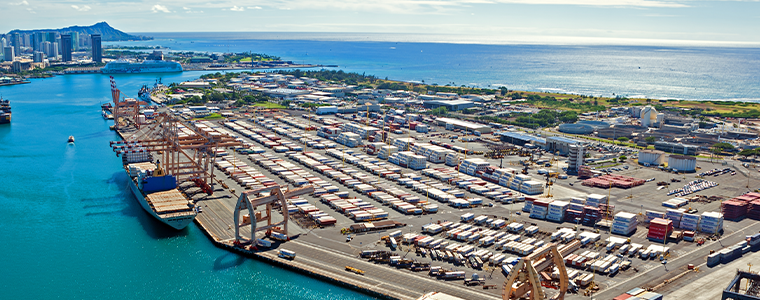
Shipping freight to destinations like Hawaii, Guam, and other Pacific islands involves a unique set of logistical challenges.
For businesses new to island freight—or those expanding their operations beyond the continental U.S.—the process can feel unfamiliar and complex. The geographic isolation, limited sailing schedules, and local infrastructure all require careful freight planning.
Whether you're managing a one-time shipment or setting up a new supply chain, understanding everything that's involved is the first step toward smooth and efficient Pacific island logistics.
In this guide, we'll walk through the key considerations—from consolidation strategies to common shipping constraints to choosing the right freight forwarder—so you can plan your island freight with confidence.
In This Article:
- Why Hawaii & Guam Shipping Is Different (And Demands Careful Planning!)
- Understanding Sailing Schedules and Timing Constraints
- Size & Handling Considerations for Pacific Freight
- Choosing Consolidation for Pacific Island Freight
- Why Your Freight Forwarder Matters, Especially for Hawaii & Guam Shipping
- Key Tips for Efficient & Effective Pacific Island Freight Shipments
- FAQs: Freight Shipping to Hawaii, Guam & Pacific Islands
Why Hawaii & Guam Shipping Is Different (And Demands Careful Planning!)

When it comes to moving freight to Pacific island destinations like Hawaii and Guam, logistics can be significantly more complex, especially compared to shipping within the mainland U.S.:
- Unlike major mainland hubs connected by air, road, and rail, getting freight to Pacific Islands relies entirely on ocean or air freight. Fewer options requires more planning, since you’ll need to negotiate more limited departures, longer lead times, and a greater sensitivity to disruptions such as weather or port congestion.
- On-island logistics can also become a challenge, since not all providers offer door-to-door service for all island destinations.
- Additionally, access issues may mean that full container shipments will need to be unpacked before delivery, adding another layer of complexity.
These elements make proactive planning essential. Understanding all the factors at play can help you avoid surprises and set up a more reliable, cost-effective supply chain.
Understanding Sailing Schedules and Timing Constraints
One of the most important differences in planning freight to Pacific islands is the limited frequency of ocean freight sailings:
- For Guam freight, Approved Forwarders offers weekly sailings
- For Hawaii freight, Approved offers twice-weekly sailings to each of the four major islands: Oahu, the Big Island, Maui, and Kauai
If you miss a sailing, your freight could sit as long as a week (for Guam shipments) before it starts moving. This can affect everything from delivery deadlines to inventory planning, especially for businesses operating on tight schedules.
Pacific Freight Tip: If you're new to freight shipping, it's important to understand the difference between the sail date of a container ship (the date it leaves port) versus the freight cut-off (which is the date by which your freight needs to be received for a specific sail date). Clarify your dates with your freight forwarder to keep your Pacific freight on track.
When timing is critical, air freight can provide a faster solution. However, it's significantly more expensive than ocean freight. It's also not ideal for oversized or heavy shipments.
A freight forwarder with deep experience moving Pacific freight can help align transit timelines with your transportation budget and operational needs.
Shipping Neighbor Island Freight to Hawaii
Getting freight to Oahu can be a relatively straightforward process. If your shipment is headed for Maui, Kauai, or the Big Island, it can get a little more complex. Direct service to Kahului (Maui), Nawiliwili (Kauai), Hilo (Big Island), and Kawaihae (Kona side of the Big Island) can save you money and shave days off transit time.
With teams and warehouses on all four major islands, we can make your Hawaii neighbor island freight shipments simple. Reach out to our team to learn more.
Size & Handling Considerations for Pacific Freight

When planning ocean freight to Pacific islands like Hawaii and Guam, understanding how your shipment fits within standard containers is key. Below, you'll find the specs for three of the most common containers used to move freight to Guam and Hawaii:
Ocean Freight Container Specs
| Container Type | Approx. Dimensions (ft) | Max Volume (ft3) |
|---|---|---|
| 20-foot Standard | 20′ x 8′ x 8’6″ | 1,171 |
| 40-foot Standard | 40′ x 8′ x 8’6″ | 2,390 |
| 40-foot High Cube | 40′ x 8′ x 9’6″ | 2,694 |
For specialized shipments, like machinery or heavy equipment, other types of containers like open-top containers and flatracks, are available.
If you've got a challenging load to move to Hawaii or Guam, send our team a message. We've moved all kinds of freight to Pacific destinations, including oversized, heavy, hazardous, and specialized freight. We'd be happy to help you come up with a solution.
Packing Considerations for Hawaii and Guam Freight
Shipments to Hawaii, Guam, and other Pacific islands travel long distances across multiple modes. Proper packing is essential. Well-secured, clearly labeled, and properly palletized freight helps maintain cargo integrity throughout the journey, reducing the risk of damage.
But don't overpack your shipment.
- On the air freight side, your weight and volume matter, so you could end up adding unnecessary charges to your freight bill. (Check out our best practices for shipping air freight.)
- On the ocean freight side, too much packing material may hamper your ability to pack your container efficiently, which can also result in extra costs.
If you're new to Pacific freight, consult your freight forwarder for advice on maximizing your protection against damage while maximizing efficiencies.
Handling Considerations for Pacific Freight
Finally, when your freight arrives on your island of choice, you'll want to be aware of a couple of potential logistical challenges around final delivery:
- Not all providers offer delivery. Make sure you ask up front so you know what to expect at your destination.
- Access issues may restrict the kind of equipment your freight provider can use for final delivery. Larger shipments may need to be deconsolidated (removed from the container) and divided among smaller delivery trucks.
- Make sure you're clear with the delivery team about the setup at your delivery address. If there's no loading dock, for example, your freight provider may need to bring a truck with a liftgate, which can come with an extra charge. By discussing these types of issues up front, you'll avoid surprises on delivery day.
Choosing Consolidation for Pacific Island Freight
For businesses shipping to Hawaii, Guam, and other Pacific islands that don't yet have the volume to fill a full container, freight consolidation offers a practical, cost-effective alternative.
With consolidation, also known as less-than-container load (LCL) shipping, smaller freight shipments are combined with others headed to similar destinations. This shared-container model allows shippers to:
- Move freight without waiting to gather enough to fill a container
- Keep inventory moving more regularly
- Lower carrying costs and reduce storage costs by relying on more frequent resupplies
LCL shipping to Guam and Hawaii can be especially helpful for businesses entering a new market and testing demand, as well as shippers who want to move smaller volumes of freight more frequently.
Pacific Freight Tip: Keep in mind that LCL/consolidated freight may not always be your fastest option. Consolidations are assembled by freight forwarders, who may hold on to your shipment until they’ve assembled a full load. A freight forwarder who ships LCL freight to Hawaii and Guam on a regular schedule can add more predictability to your LCL shipments.
Why Your Freight Forwarder Matters, Especially for Hawaii & Guam Shipping
Pacific island freight logistics come with complexities that are often unfamiliar to mainland shippers. That's where a freight forwarder with significant Pacific shipping lane expertise comes in.
A veteran forwarder can offer all kinds of advantages for moving freight to islands like Hawaii and Guam, including:
- Coordinating timing so your freight meets important cut-off windows
- Advising on packaging, consolidation, and routing to create new efficiencies within your supply chain
- Planning for busy freight seasons, including the holidays and back to school
- Troubleshooting disruptions such as weather delays or freight disruptions
- Ensuring smooth final delivery, even in remote island locations
For Hawaii in articular, local knowledge makes a big difference. Few forwarders have on-the-ground operations across all four major islands. That kind of local presence enables greater responsiveness and more reliable delivery outcomes.
Similarly, for destinations like Guam—which has its own customs agency and where ocean freight transit times can stretch over two weeks—working with a forwarder who knows the territory can help avoid delays and minimize surprises.
Ultimately, the right logistics partner means less time managing freight and more time focusing on your core business.
Key Tips for Efficient & Effective Pacific Island Freight Shipments
If you're new to shipping freight to destinations like Hawaii or Guam, the learning curve can feel steep. With the right preparation, you can avoid common pitfalls and set up your supply chain for success.
Below, you'll find our tips for navigating Hawaii and Guam freight:
1. Start Early
The earlier you start planning your shipment, the more options you'll have available to you. Give your forwarder as much lead time as possible on your next shipment, especially during busy times like the holiday and back-to-school seasons.
2. Consider All Your Options
You might be sure that full container load (FCL) shipments are the way to go, but the numbers may say otherwise. Choose a freight forwarder who will consider your shipping needs holistically and help you run several possible scenarios. What you discover may surprise you.
3. Package Thoughtfully & Strategically
Guam and Hawaii freight often passes through multiple handling points. Ensure your freight is properly secured, labeled, and packaged to withstand any minor bumps along the way. Keep in mind that overpacking may work against you, taking up valuable container space and costing you money. Work closely with your forwarder to optimize your packaging for efficiency and effectiveness.
4. Understand Delivery Conditions
Final delivery on Guam, Hawaii, or another Pacific island may present challenges. In some cases, there may be limited access for large trucks or little equipment at delivery destinations. Clarify delivery requirements up front to avoid delays or re-delivery fees.
FAQs: Freight Shipping to Hawaii, Guam & Pacific Islands
Finally, we'll review a few frequently asked questions to round out your knowledge on planning and shipping freight to Pacific island destinations.
Plan Smart, Ship Confidently
Shipping freight to Pacific island destinations like Hawaii and Guam comes with unique logistical challenges. However, with the right knowledge and preparation, it's entirely manageable. (Especially if you've got a solid freight forwarder as a partner!)
Need help planning your next shipment to Hawaii, Guam, or beyond? Approved Forwarders has the experience, infrastructure, and local presence to guide you through every step. Reach out to our team today for a complimentary quote.
Get a Free Quote


