

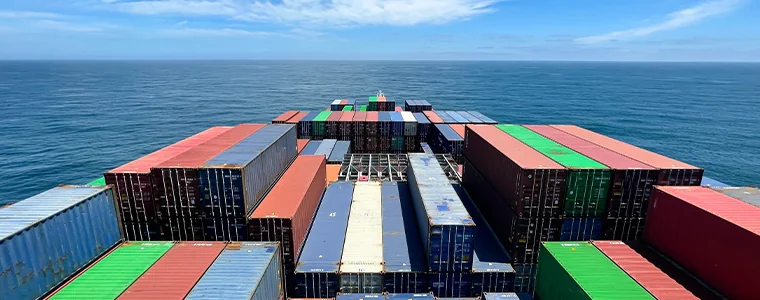
For U.S. businesses shipping freight to or from Brazil, understanding the logistics landscape in both countries is critical for success.
This ultimate guide will give you a clear, detailed understanding of Brazil freight shipping—including international shipping and container shipping. We’ll walk you through choosing the right mode for Brazil freight shipments, navigating import/export procedures, and preparing customs documentation. Finally, we’ll offer a few tips from our international experts that will help keep your freight to Brazil moving.
In The Article
- Brazil–U.S. Freight at a Glance
- Choosing the Right Shipping Method for Brazil Freight
– Brazil Ocean Freight
– Brazil Air Freight
Brazil–U.S. Freight at a Glance

Brazil is the United States' ninth-largest export partner. The two countries exchange billions of dollars in manufactured goods, industrial equipment, consumer products, and raw materials.
Brazil–U.S. Freight Stats at a Glance
| U.S. Exports to Brazil | $49.1 billion |
|---|---|
| U.S. Imports from Brazil | $42.3 billion |
| Total U.S. Trade with Brazil | $91.5 billion |
| Total U.S. Trade with Brazil | $91.5 billion |
2024 Data: Source
Major U.S. Imports from Brazil
- Mineral fuels, oils, distillation products
- Iron and steel
- Machinery, nuclear reactors, boilers
- Coffee, tea, mate, and spices
- Aircraft, spacecraft
- Pulp of wood, fibrous cellulosic material, waste
- Wood and articles of wood, wood charcoal
Major U.S. Exports to Brazil
-
Aircraft, spacecraft
- Mineral fuels, oils, distillation products
- Machinery, nuclear reactors, boilers
- Electrical, electronic equipment
- Plastics
- Pharmaceutical products
- Organic chemicals
- Optical, photo, technical, medical apparatus
International shipping between the U.S. and Brazil can be challenging. In addition to the usual need to navigate customs procedures associated with international shipping, Brazil also requires importers to navigate several layers of bureaucracy before they can ship goods into the country.
Let’s break it all down, starting with your options for Brazil shipping.
Choosing the Right Shipping Method for Brazil Freight

When shipping freight to or from Brazil, you’ll have two main options to consider: ocean freight and air freight. To decide which is right for your freight project, consider two factors:
- What’s your timeline?
- What’s your budget?
Generally, the faster you need your Brazil freight to move, the more expensive your cost. Keep this in mind as we walk through a detailed comparison of Brazil ocean freight and Brazil air freight.
Brazil Ocean Freight: FCL and LCL
Cost:
Speed:
Average Timeline: 25-50 days
For international freight shipments to and from Brazil, ocean freight remains the most popular option, largely due to its affordability.
Ocean freight will likely be your cheapest method for Brazil freight, although it’s
significantly slower than air freight. However, if you’re shipping large volumes of freight, heavy freight, or hazardous freight, ocean freight will be your best (and possibly only) option.
Estimated Brazil Ocean Freight Transit Times
| Route | Estimated Time |
|---|---|
| Miami → Santos | 15–20 days |
| Houston → Rio de Janeiro | 16–23 days |
| New York → Paranaguá | 18–25 days |
| Santos → Los Angeles | 22–28 days |
(Note: Transit times represent the time it takes for the container ship to travel from origin to destination port. You’ll need to add additional time for freight cut-offs, pickup/delivery, loading/unloading, customs clearance, and deconsolidation.)
Top Brazil Seaports for International Shipping
| Port | Location | Strengths | Common U.S. Connections |
|---|---|---|---|
| Port of Santos | São Paulo | Brazil’s largest port and the busiest container port in Latin America | Miami, Houston, New Orleans, New York |
| Port of Rio de Janeiro | Southeast Brazil | Handles consumer goods, chemicals, petroleum, and general cargo | New York, Savannah, Charleston |
| Port of Paranaguá | Southern Brazil | Major hub for agricultural exports | Houston, New Orleans |
If you choose ocean freight for your Brazil shipments, you’ll have two options:
Option #1: Full Container Load (FCL) Service
Full container load (FCL) service means you’ll have the exclusive use of a 20-foot or 40-foot container to fill with your freight as you please.
Why choose FCL for Brazil freight?
- For larger volumes of freight, a dedicated container will be the most economical choice.
- For high-value goods, a dedicated container also offers added security.
- FCL shipments can also move more quickly, since you don’t have to wait for a freight forwarder to complete their load or unload a shared container at the destination point.
Option #2: Less than Container Load (LCL) Service
Less-than-container-load (LCL) service—also known as consolidated freight—allows you to share space with other shippers moving freight to a similar destination.
Why choose LCL for Brazil freight?
- This shipping method can be cost-effective if you don’t have enough cargo to justify a dedicated container.
- Because you don’t have to fill an entire container, it can feel like a more flexible solution for growing businesses.
It’s important to recognize that LCL service can take longer than shipping a full container. LCL service is provided by freight forwarders, who gather smaller shipments from different shippers. They may hold your cargo in their warehouse until they’ve assembled a full load.
Brazil Container Shipping Tip: If you decided to use LCL service, choose a forwarder that specializes in Brazil freight. These forwarders will generally assemble a full load more quickly. Some Brazil freight forwarders may also move their LCL shipments on a regular schedule, regardless of freight volume.
Brazil Air Freight
Cost:
Speed:
Average Timeline: 1-4 days
If you’re shipping time-sensitive, high-value, or perishable products, Brazil air freight will be your best option. It’s ideal for the following commodities:
- Pharmaceuticals
- Electronics and precision instruments
- High-end accessories, like handbags and jewelry
- Medical and surgical equipment
Top Brazil Air Freight Hubs
| Airport | City | Strengths |
|---|---|---|
| São Paulo-Guarulhos International Airport (GRU) | São Paulo | Moves the largest air cargo volume in Brazil |
| Viracopos International Airport (VCP) | Campinas | Handles ~40% of imported air cargo |
| Rio de Janeiro/Galeão International Airport (GIG) | Rio de Janeiro | Processes a wide variety of freight |
| Eduardo Gomes International Airport (MAO) | Manaus | Critical air cargo hub for Latin America cargo with connections to Miami |
Brazil air freight is significantly faster than ocean freight, but it's also significantly more expensive. Air freight is priced by either gross weight or volumetric weight, whichever is larger. As a result, heavy and/or oversized freight can be cost prohibitive. Additionally, some hazardous materials are prohibited as air cargo.
The Bottom Line: When choosing between ocean freight and air freight, you'll have to balance cost and speed:
- Ocean freight will be more economical but slower.
- Air freight will be more expensive but faster.
Talk to your Brazil freight forwarder to quote out your options. You might also be able to get creative with an expedited LCL shipment or an air freight consolidation that meets your timeline without breaking your budget.
Shipping Freight to Brazil: Customs & Import/Export Requirements
Freight shipping between the U.S. and Brazil requires navigating strict customs regulations. Brazil, in particular, is known for its high taxes and tariffs on U.S. imports, as well as complex tax and legal systems. Understanding the customs process—and preparing the right documents—is essential for avoiding delays, fines, or even seized cargo.
Note: In 2025, the U.S. government announced a series of tariffs that apply to imports from Brazil. Make sure to take these tariffs into account as you calculate your landed cost for Brazil freight. Read more about the Brazil tariffs at whitehouse.gov.
Steps for Shipping to Brazil
Step 1: Anyone wanting to import goods into Brazil needs to register with the Secretariat of Foreign Trade (SECEX), a branch of the Ministry of Development, Industry, Trade and Services (MDIC) via Siscomex.
Step 2: To access Siscomex, importers also need a Radar license, which is issued by the Receita Federal do Brasil. It can take up to 10 business days to get a Radar license issued.
Step 3: All imports require a Declaração de Importação, an import declaration created within Siscomex. (Shipments valued under $3,000 USD can be declared via the simplified import declaration form, Declaração Simplificada de Importação.)
Step 4: Additionally, certain goods—including alcohol, medical devices, cosmetics, electronics, food, and more—may require an import license.
Required Documentation for Brazil Freight
- A commercial invoice that includes product descriptions and values
- A certificate of origin, which will determine any applicable tariffs
- A bill of lading (BOL) or airway bill (AWB)
- Import declaration in Siscomex, which may be handled by a customs broker
- Import license, if required
Restricted or Prohibited Items for Brazil Freight
Brazil has strict rules for imports. Make sure to check the full list of prohibited and restricted imports, which includes:
- Used goods or refurbished/remanufactured products
- A number of animal and plant products, including poultry and pork
- Narcotics and illegal drugs
- Counterfeit and pirated goods
- Hazardous materials
- Pornographic materials
- Weapons and other dangerous items
Specific permits are required for certain types of cargo, including:
- Certain animal products
- Electronics
- Precious materials, including diamonds
- Cosmetics, pharmaceuticals, vitamins, cosmetics, and medical equipment/devices
If you’re uncertain about the import regulations that apply to your shipment, make sure you ask your freight forwarder or customs broker up front. They can help you head off any issues, right from the start.
Shipping Freight from Brazil: Customs & Import/Export Requirements
Brazil Export Note
When exporting items from Brazil, the Declaração Única de Exportação (DU-E) within the Siscomex Portal will streamline all the necessary documentation needed for an export from Brazil.
All imports to the U.S. must comply with U.S. Customs and Border Protection (CBP) rules. Certain goods may be subject to clearance by other U.S. agencies, including:
When shipping international freight from Brazil to the U.S., missed forms, incorrect product classifications, or non-compliance with import regulations can stop your Brazil freight in its tracks.
1. Prepare the Correct Documentation for U.S. Imports
As with shipments to Brazil, ensuring you’ve got all the right paperwork for your U.S. shipment is critical. Work with your Brazil freight forwarder or customs broker to assemble everything, which usually includes:
- Bill of lading (BOL) or airway bill (AWB)
- Complete packing list
- Commercial invoice with product descriptions, value, and country of origin
- Certificate of origin, which will determine applicable tariffs
An Importer Security Filing (ISF, also known as “10+2”) will also need to be completed for any containers coming from Brazil. A Brazil freight forwarder or customs broker can facilitate all of this for you, streamlining the import process.
2. Classify Goods Accurately Using HTS Codes
Every item imported into the U.S. must be classified under the Harmonized Tariff Schedule (HTS). The HTS code for a shipment will determine:
- Any applicable duties and tariffs
- Eligibility for applicable trade exemptions
- Any additional requirements, such as FDA clearance
Incorrect HTS codes can delay customs clearance into the U.S. If you have any questions about the HTS code for your imports, your Brazil freight forwarder can assist.
Should You Use a Customs Broker for Brazil Freight?
Customs brokers can help streamline customs procedures, including calculating taxes and duties, filing paperwork, and assisting with imports that run into challenges during the clearance process.
Some Brazil freight forwarders work directly with customs brokers to help facilitate customs clearance. This can offer shippers a smoother, more predictable import experience. Serving as your single point of contact, your freight forwarder can coordinate with a customs broker behind the scenes, so you don’t have to manage multiple relationships yourself.
Before you choose a Brazil freight forwarder, ask whether they have the ability to handle customs clearance in partnership with a customs broker. This service can add a significant layer of ease to your next Brazil shipping project.
Planning Your Next Shipment: Key Tips for U.S.–Brazil Freight
Finally, our expert team has three tips to simplify your next Brazil shipping project, whether you’re moving a shipping container to Brazil from the USA or executing an international shipment from Brazil.
1. Know Your Incoterms
Incoterms define the responsibilities of buyers and sellers in international transactions, including who covers international shipping, insurance, and duties. Choosing the right Incoterm can have a major impact on your total landed cost.
A freight forwarder experienced in Brazil freight can help you evaluate which Incoterm will work best for your situation. Whether you’re the buyer or the seller, your forwarder can run cost scenarios for common terms like EXW or FAS. With that clarity, you’ll be better positioned to negotiate an effective contract, protect your margins, and avoid unexpected costs
2. Plan Your Timelines Carefully
When it comes to international shipping from Brazil (or another destination), planning ahead is essential to keep your supply chain on track. Door-to-door transit times can get complicated when multiple freight modes are involved, and delays can crop up, especially during peak shipping seasons. Where Brazil is concerned, keep an eye on the Carnival calendar. Many businesses will close around that time, which can delay shipments.
To reduce the risk of disruption:
- Lean on your freight forwarder’s expertise to map out realistic shipping timelines, factoring in freight cut-offs, pick-up/delivery, customs clearance, loading, and unloading.
- If your timeline is tight, ask about options that can move your Brazil freight faster, such as air freight or expedited LCL service.
3. Get Clear on the “Hidden Costs” of Ocean Freight
If it’s your first time shipping ocean freight, you may be surprised at all the “extra” charges on your ocean freight invoice. Some forwarders will combine all of these charges into a single, all-in-one charge, which can make it easier to calculate your final landed cost. Other forwarders may break out these charges into separate line items.
When you’re comparing quotes, make sure to ask your freight forwarder if all of these common ocean freight charges are included for your Brazil freight shipment:
- Drayage
- Fuel surcharges/bunker fuel surcharges
- Terminal handling charges
- Wharfage
- Warehousing/storage
- Customs clearance fees/inspection fees
With that knowledge, you’ll be able to plan more accurate budgets and price your products confidently.
Efficient & Cost-Effective Brazil Freight Shipping
With close attention to detail—and the right partnerships—shipping freight between the U.S. and Brazil can be both efficient and cost-effective. An experienced Brazil freight forwarder and an effective customs broker can make all the difference when it comes to navigating import/export procedures, understanding customs regulations, and creating a cost-effective freight plan.
Looking for an experienced freight forwarder to assist with your Brazil freight? Approved Freight Forwarders specializes in efficient, cost-effective solutions for international freight, including shipping containers to Brazil. To get started, reach out for a complimentary quote from our team.
Get a Free Quote


